You searched for third tone | Page 2 of 12 | Hacking Chinese Page 2
-
Hacking Chinese Tones: Speaking with Confidence
Hacking Chinese Tones: Speaking with Confidence The resources and methods you need to learn Mandarin tones Member area Tones are essential; get them right now and save yourself a ton of trouble later Learning the pronunciation of a new language can be fascinating, opening a whole new world of sound. But it can […]
Read → -
Does using colour to represent Mandarin tones make them easier to learn?

Some learning materials, apps and tools allow you to add colours to show Mandarin tones, but is this really helpful? This article discusses the ins and outs of using colour to learn and remember tones, along with some practical considerations.
Read → -
Tone errors in Mandarin that actually can cause misunderstandings

Accidentally saying “chest hair” in Chinese when you mean “panda” is amusing, but it rarely causes confusion. Let’s look at some tone mistakes that actually do cause confusion!
Read → -
Obligatory and optional tone change rules in Mandarin
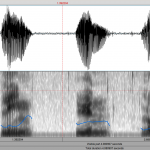
As if learning basic tones wasn’t enough, tones in Mandarin also influence each other and change depending on context. Some of these tone change rules you have to learn, but others are better left alone and will be absorbed automatically over time.
Read → -
Sensible character learning challenge 2014: Milestone #3
The second milestone in the 2014 sensible character learning challenge has now been reached! This is also the last opportunity to join the challenge if you haven’t already. If you have, it’s time to report you progress in May. This article also contains information about prizes (character posters, free extensions and Chinese learning products) for the third milestone, as well as my own reflections of my character learning.
Read → -
Focusing on tone pairs to improve your Mandarin pronunciation
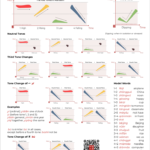
When learning to pronounce tones in Chinese, it makes sense to focus on words rather than single syllables. Most words in Mandarin are disyllabic and since practising these will also include tone changes (sandhi), focusing on tone pairs is recommended. This article gives you all HSK and TOCFL words, sorted by tone! First all [first tone] + [first tone], then all [first tone] + [second tone] and so on. This is great for students who need words to practise difficult combinations, but it’s also useful for teachers.
Read → -
The tones in Mandarin are more important than you think

Tones are more important than most people think. Just because native speakers reduce tones and speak quickly, it doesn’t mean that you can do the same and get away with it. Don’t be fooled by people who say that tones in Chinese aren’t as important as all that, because they’re wrong.
Read → -
Chinese listening, fast and slow: Three ways of slowing down Mandarin speech

Spoken Mandarin can feel like an onslaught of similar sounds, half-recognised tones and unknown words. To add insult to injury, it’s often too fast! Should you slow it down? If so, how?
Read → -
16 myths about learning Chinese that are holding you back

Believing the wrong things about learning Chinese can waste time and lead you astray. Let’s explore 16 myths that might be holding you back!
Read → -
Learning Chinese through comprehensible input
Can you really learn Mandarin through listening and reading alone? What is comprehensible input, and how do you get enough of it?And how do speaking, writing, grammar, and flashcards fit in?
Read →